Blog posts of '2025' 'December'

The Ultimate Off-Road Truck Build Guide: From Stock to Trail-Ready in 5 Stages

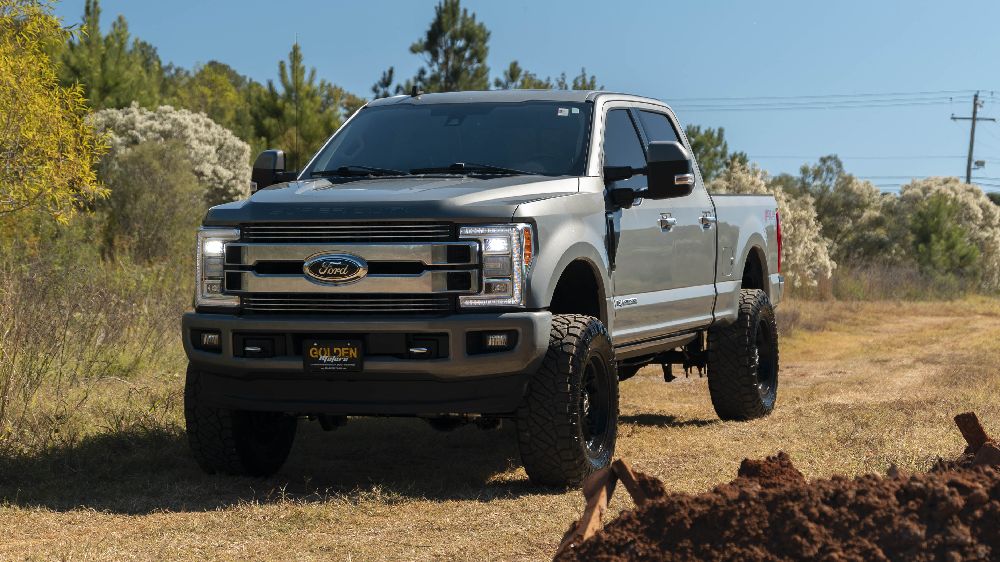
Building an off-road truck from stock can feel overwhelming. There are lift kits, tires, wheels, armor, lighting, recovery gear, and a hundred opinions on what to do first. The truth is, you don’t need to do everything at once. The best builds are done in stages, with each step adding real performance and capability.

This guide walks you through a 5-stage off-road build plan—from completely stock to trail-ready—so you can upgrade your truck in a smart, intentional way that fits your budget and your driving style.


What You’ll Learn in This Guide

In this article, we’ll cover:

  • The 5 key stages of an off-road truck build, from basic to hardcore.

  • Which upgrades to prioritize first for the biggest gains.

  • How to balance daily drivability, trail performance, and budget.

  • Recommended categories of parts and accessories for each stage.

By the end, you’ll know exactly where your truck is now—and what the next step should be.


Stage 1: Foundation – Tires, Basic Protection, and Maintenance

Before big lifts or bumpers, start with the basics.

1. Tires

Your tires are your truck’s only contact with the ground.

  • Upgrade to all-terrain or mud-terrain tires sized appropriately for your stock or leveled setup.

  • All-terrains are ideal for daily drivers; mud-terrains for more aggressive trail use.

2. Basic Protection

Even light trails can damage unprotected components.

  • Skid plates for the engine and transmission.

  • All-weather floor liners to protect the interior from mud and sand.

3. Maintenance

A lifted, armored truck won’t help you if it’s not mechanically sound.

  • Fresh fluids, filters, belts, and brakes.

  • Fix leaks and worn suspension parts before you start adding stress.

This stage alone can transform how confident your truck feels on mild trails.


Stage 2: Stance and Clearance – Leveling Kits and Mild Lifts
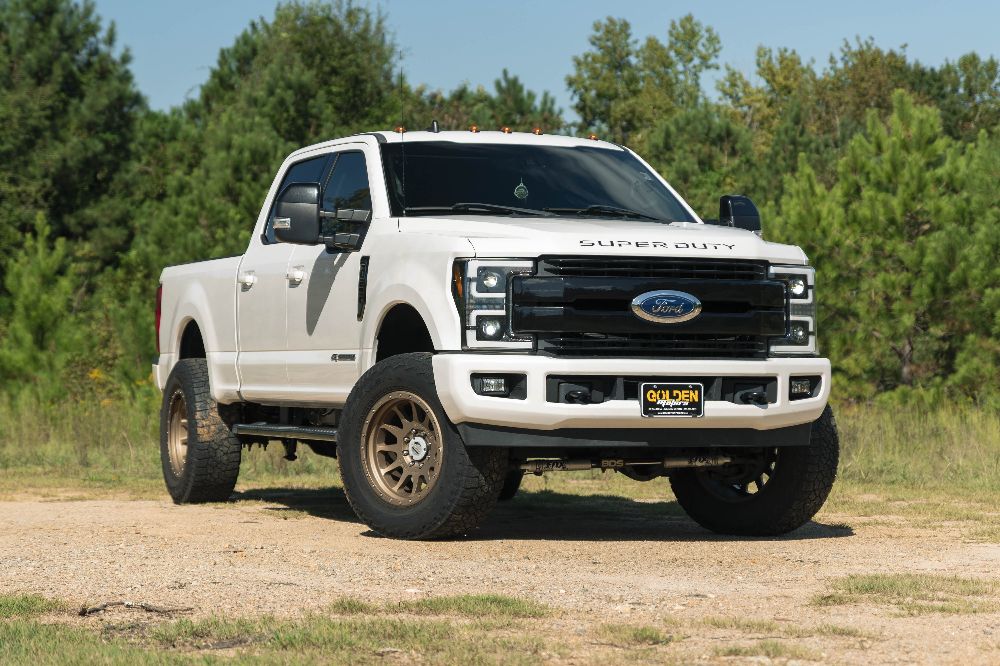
Once you’ve got good tires and the truck is healthy, it’s time to address ride height and stance.

1. Leveling Kit or Mild Lift

Most trucks sit nose-down from the factory.

  • A leveling kit (1–2") evens out the stance and makes room for slightly larger tires.

  • A mild suspension lift (2–3") adds more clearance and better suspension travel.

2. Wheels (Optional but Recommended)

This is a good time to upgrade wheels if you want:

  • 17" or 18" off-road wheels with proper width and offset for your tires.

  • Stronger construction and better brake clearance than many OEM wheels.

3. Alignment

Anytime you change ride height, get a proper alignment to protect tires and handling.

At the end of Stage 2, you’ve got a truck that still drives comfortably every day but looks and performs better off-road.


Stage 3: Protection and Recovery – Armor, Bumpers, and Gear

Now that you’re venturing onto more serious trails, it’s time to protect the truck and prepare for getting stuck.

1. Full Undercarriage Protection

Add armor where it counts:

  • Skid plates for engine, transmission, transfer case, and fuel tank.

  • Rock sliders to protect doors and rocker panels from rocks and stumps.

2. Front and Rear Bumpers

Upgraded bumpers are both functional and cosmetic.

  • Steel or aluminum front bumper with recovery points (D-ring mounts, winch plate).

  • High-clearance rear bumper for better departure angle and rear protection.

3. Recovery Gear

Bring what you need to get out of trouble:

  • Recovery straps, soft or steel shackles, traction boards, shovel.

  • Winch mounted to your front bumper for solo recoveries.

At Stage 3, your truck can handle real trails without you worrying about every rock under the frame.


Stage 4: Performance and Control – Suspension, Steering, and Lighting

With protection sorted, it’s time to refine how the truck handles and performs on and off-road.

1. Upgraded Suspension

Move beyond basic spacers.

  • Performance shocks and coilovers for better control over washboards, whoops, and rocky sections.

  • Upgraded rear leaf packs or coils to handle extra weight from armor and gear.

2. Steering and Brakes

Bigger tires and armor add weight and stress.

  • Heavy-duty tie rods, ball joints, and control arms for durability.

  • Upgraded pads and rotors for improved stopping power.

3. Lighting

See more, earlier, and safer.

  • LED light bars or pod lights for trail visibility.

  • Ditch lights, fog lights, and rear work lights for night wheeling and campsite use.

By Stage 4, your truck doesn’t just survive the trail—it drives confidently on it.


Stage 5: Advanced Upgrades – Gearing, Lockers, and Overland Setup

This is where you take a capable rig and turn it into a specialized machine.

1. Re-Gearing

If you’ve stepped up to larger tires (35s or 37s), your stock gears are likely struggling.

  • Re-gearing differentials restores acceleration, towing power, and drivability.

  • Helps protect your transmission and improves fuel economy under load.

2. Lockers and Differential Upgrades

For maximum off-road traction:

  • Selectable lockers (front and/or rear) to send power where you need it.

  • Ideal for rocky terrain, deep mud, and technical climbs.

3. Overland and Expedition Gear (Optional)

If you’re traveling far off-grid:

  • Roof racks, bed racks, rooftop tents, and storage systems.

  • Onboard air systems, dual-battery setups, and fridge/freezers.

Stage 5 isn’t mandatory for everyone—but for serious off-roaders and overlanders, it’s where the truck becomes a purpose-built tool.


Building in Stages = Saving Money and Headaches

The biggest mistake many people make is throwing random parts at a build with no plan. Building in stages helps you:

  • Prioritize upgrades that matter most for how you drive.

  • Test each change and adjust before moving on.

  • Avoid buying parts twice because you rushed early decisions.

You don’t need to jump straight to Stage 5. Even a solid Stage 2 or 3 build can take you on incredible adventures.


The ultimate off-road truck isn’t built overnight—it’s built in stages. Start with reliable basics, then add clearance, armor, recovery gear, and performance as your skills and goals evolve.

👉 At our shop, we carry everything you need for every stage of your build—from tires, wheels, and lift kits to skid plates, bumpers, lighting, recovery gear, and re-gearing components. Whether you’re just starting at Stage 1 or leveling up to Stage 5, we’re here to help you build a truck that’s ready for wherever the trail leads.
Comments (0) details

Best Off-Road Trucks You Can Buy Used in 2025 (And How to Build Them Right)

If you’re looking to get into off-roading in 2025, buying used is one of the smartest moves you can make. Modern trucks are expensive off the lot, but the used market is full of reliable, proven platforms that already have strong aftermarket support.

The key is choosing a truck that’s easy to build, easy to live with, and easy to find parts for—then upgrading it with the right wheels, tires, suspension, and armor.

This guide breaks down some of the best used off-road trucks you can buy in 2025—and how we’d build each one.


What You’ll Learn in This Guide

In this article, we’ll cover:

  • The most popular used off-road trucks to hunt for in 2025.

  • What each platform does best—reliability, comfort, capability.

  • Smart, proven upgrade paths for wheels, tires, lift kits, and armor.

  • How to build your truck right the first time without wasting money.

By the end, you’ll have a short list of trucks to shop for—and a game plan for modding them.


1. Toyota Tacoma (2nd & 3rd Gen)

The Toyota Tacoma is the poster child for used off-road trucks. It’s reliable, easy to work on, and has huge aftermarket support.

Why It’s a Great Used Buy

  • Reliability: Known to go well past 200k miles with proper maintenance.

  • Size: Midsize footprint makes it ideal for tight trails and city parking.

  • Support: Endless options for lifts, bumpers, wheels, tires, and armor.

How We’d Build It

  • Wheels & Tires:

    • 17x8.5 or 17x9 wheels

    • 33" all-terrain tire (285/70R17) for daily/trail balance

  • Suspension:

    • 2–3" suspension lift with upgraded front coilovers and rear leaf packs or add-a-leaf

  • Armor & Protection:

    • Front skid plate, transmission skid, and rock sliders

  • Lighting:

    • Ditch lights or A-pillar pods + a small bumper light bar

This setup gives you a comfortable daily driver that’s fully capable on weekend trails and overlanding trips.


2. Jeep Wrangler (JK & JL)

If you want an open-air trail rig with serious aftermarket support, it’s hard to beat a used Wrangler.

Why It’s a Great Used Buy

  • Off-Road DNA: Solid axles, short wheelbase, and great articulation.

  • Customization: Removable doors, roof, endless bumpers, and armor options.

  • Aftermarket: Probably the largest off-road parts catalog of any vehicle.

How We’d Build It

  • Wheels & Tires:

    • 17x9 wheels

    • 35" mud-terrain or hybrid tire (315/70R17)

  • Suspension:

    • 2.5–3.5" lift kit with upgraded control arms and track bar

  • Armor & Recovery:

    • Steel front bumper with winch

    • Rock sliders and differential covers

  • Extras:

    • Rear tire carrier if running 35s or larger

This build turns a used Wrangler into a true do-it-all trail rig that still works for daily use if you don’t mind a bit of tire noise.


3. Toyota 4Runner (4th & 5th Gen)

Want 4 doors, cargo space, and Toyota reliability? A used 4Runner is a killer platform for off-road and overland builds.

Why It’s a Great Used Buy

  • Interior Space: Plenty of room for family, dogs, and gear.

  • Reliability: Proven V6 engines and strong drivetrains.

  • Comfort: More refined ride than most pickup-based builds.

How We’d Build It

  • Wheels & Tires:

    • 17x8.5 wheels

    • 33" all-terrain (285/70R17) for daily + trail use

  • Suspension:

    • 2–3" lift with upgraded shocks and springs (front & rear)

  • Armor & Utility:

    • Skid plates (engine, transmission, transfer case)

    • Roof rack for cargo, rooftop tent, or extra gear

  • Lighting:

    • LED fogs + roof or rack-mounted area lighting

This recipe turns a used 4Runner into a comfortable, long-haul adventure rig that can handle trails, camping, and road trips with ease.


4. Ford F-150 (FX4, Tremor, Raptor, or Well-Optioned 4x4)

A used F-150 gives you full-size comfort, power, and towing with surprisingly strong off-road potential.

Why It’s a Great Used Buy

  • Availability: Tons of used inventory to choose from.

  • Power: Strong engines for towing and highway driving.

  • Versatility: Can be both a work truck and a weekend off-roader.

How We’d Build It

  • Wheels & Tires:

    • 17x9 or 18x9 wheels

    • 34–35" all-terrain tire (295/70R18 or 35x12.50R17)

  • Suspension:

    • 2–3" suspension lift or quality coilover kit

  • Armor:

    • Front skid plate and optional low-profile front bumper

  • Lighting & Utility:

    • Bed lights, rear-facing work lights, and upgraded headlights

With the right parts, a used F-150 can go from mild FX4 to seriously capable full-size trail truck that still tows and hauls.


5. Chevy Silverado / GMC Sierra (Z71, Trail Boss, AT4)

GM’s half-ton trucks have quietly become solid off-road platforms—especially in Z71, Trail Boss, or AT4 trims.

Why It’s a Great Used Buy

  • Value: Often less expensive on the used market than similar spec competitors.

  • Comfort: Great interiors and highway manners.

  • Capability: Factory off-road packages give you a head start.

How We’d Build It

  • Wheels & Tires:

    • 17x9 or 18x9 wheels

    • 33–35" A/T or hybrid tire

  • Suspension:

    • Leveling kit or 2–3" lift (especially on non–Trail Boss trucks)

  • Armor:

    • Skid plates and step/rock sliders

  • Extras:

    • Rear air bags or helper springs if you tow frequently

This setup keeps the truck comfortable for commuting but far more confident on trails, job sites, and camping trips.


6. Budget Wildcard: Nissan Xterra or Frontier

If you’re shopping on a tighter budget, older Nissan Xterras and Frontiers are underrated off-road platforms that can still hang on the trail.

Why They’re Great Used Buys

  • Price: Often cheaper than Toyota and Jeep equivalents.

  • Capability: Real 4x4 systems with low range and decent clearance.

  • Aftermarket: Smaller than Toyota/Jeep, but enough support for a solid build.

How We’d Build It

  • Wheels & Tires:

    • 16" or 17" wheels

    • 32–33" all-terrain tires

  • Suspension:

    • 2–3" lift for extra clearance

  • Armor:

    • Skid plates and rock sliders

  • Lighting:

    • Front light bar or bumper pods for night runs

Perfect for someone who wants a capable trail rig without paying Toyota tax.


Final Thoughts

The best used off-road truck in 2025 isn’t just about the badge on the grille—it’s about choosing a solid platform and building it right. Whether you go with a Tacoma, Wrangler, 4Runner, F-150, Silverado, or a budget-friendly Xterra/Frontier, the right combination of wheels, tires, suspension, and armor turns a good truck into a great one.

👉 At our shop, we stock lift kits, wheels, tires, skid plates, lighting, and recovery gear for all of these platforms—so whether you just picked up your first used rig or you’re refreshing a high-mile trail truck, we can help you build it the right way from day one.

Comments (0) details

What’s the Best Wheel Size for 33s, 35s, and 37s? A Practical Fitment Guide

Upgrading to 33s, 35s, or 37s can completely change how your truck looks and performs—but the tires are only half the equation. The wrong wheel size, width, or offset can cause rubbing, poor handling, and premature wear. The right setup, on the other hand, gives you clean fitment, better performance, and a dialed-in stance.
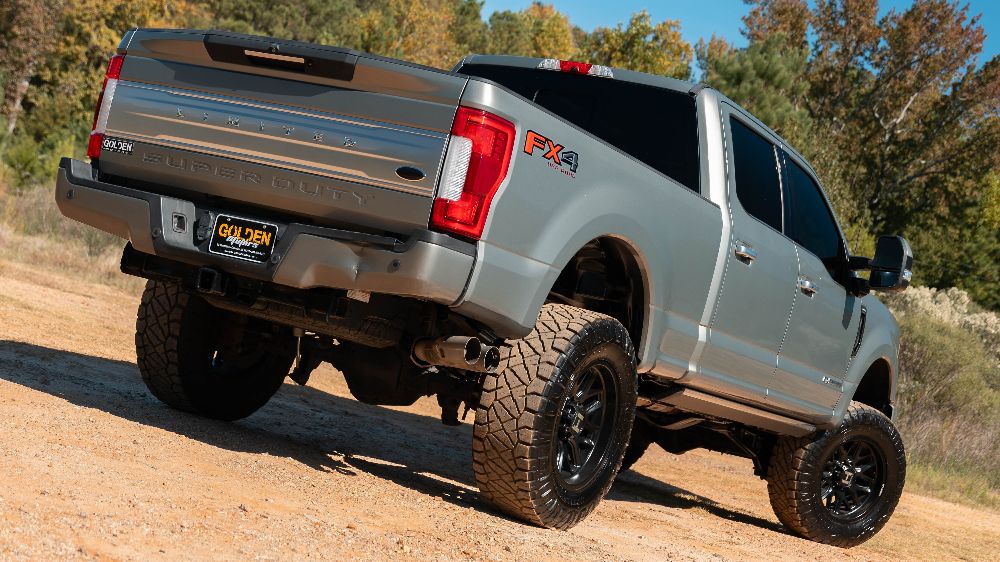
This guide breaks down real-world wheel and tire combos that work for most popular off-road trucks and SUVs, so you can spend less time guessing and more time driving.


What You’ll Learn in This Guide

In this article, we’ll cover:

  • The best wheel diameters for 33", 35", and 37" tires.

  • Recommended wheel widths and offsets/backspacing for clean fitment.

  • How to choose between 17", 18", and 20" wheels for your build.

  • Practical combos that balance performance, comfort, and stance.

By the end, you’ll know exactly what wheel size to pair with your tire upgrade.


Why Wheel Size Matters

Wheel size isn’t just about looks—it directly affects:

  • Sidewall height: More sidewall = better flex, comfort, and off-road grip.

  • Fitment and rubbing: The wrong offset or width can cause rubbing on fenders or control arms.

  • Strength and durability: Smaller-diameter off-road wheels are usually stronger and better protected by the tire.

That’s why most serious off-road builds favor 17" or 18" wheels with larger tires, instead of big 20s+ with thin sidewalls.


Best Wheel Size for 33" Tires

Common size: 285/70R17, 285/75R16, 275/70R18 (roughly 33" tall)

33s are a perfect “step up” from stock for daily drivers that still see trail time.

Recommended wheel diameters:

  • 17" – ideal for off-road and mixed-use.

  • 18" – good for trucks with larger brakes or more street-focused builds.

Recommended wheel widths:

  • 8.5" to 9" wide

Recommended offset / backspacing (general guidelines):

  • Offset: +0mm to +18mm for mild poke and good clearance on most trucks.

  • Backspacing: around 4.5"–5" for typical 17x9 wheels.

Great all-around 33" combos:

  • 33x12.50R17 on a 17x9, 0mm wheel

  • 285/70R17 on a 17x8.5, +10mm wheel

This gives you a slightly wider stance without going crazy, and generally works with a leveling kit or mild lift on many platforms.


Best Wheel Size for 35" Tires

Common size: 315/70R17, 295/70R18, 35x12.50R17

35s are the sweet spot for many off-road builds—aggressive look, serious capability.

Recommended wheel diameters:

  • 17" – best for off-road and airing down.

  • 18" – acceptable for mixed-use or newer trucks with big brakes.

Recommended wheel widths:

  • 8.5" to 9" (for 12.5" wide tires, 9" is ideal)

Recommended offset / backspacing:

  • Offset: typically -12mm to +12mm, depending on truck and fender clearance.

  • Backspacing: around 4.5"–4.75" on a 17x9.

Sample 35" combos:

  • 35x12.50R17 on 17x9, -12mm (wider stance, more poke, may need trimming on some trucks).

  • 315/70R17 on 17x9, 0mm (cleaner, more tucked look; good for mild lifts).

Most trucks will need at least a 2–3" suspension lift or leveling kit and possibly minor trimming or crash bar mods to run 35s comfortably.


Best Wheel Size for 37" Tires

Common size: 37x12.50R17, 37x13.50R17, 37x12.50R18

37s are for serious builds—you’re fully committed at this point.

Recommended wheel diameters:

  • 17" – the standard for off-road 37s.

  • 18" – possible, but you’ll lose some sidewall.

Recommended wheel widths:

  • 9" wide is the most common and practical.

Recommended offset / backspacing:

  • Offset: -24mm to 0mm, depending on axle width and fender clearance.

  • Backspacing: typically 4.25"–4.75" on a 17x9.

Sample 37" combos:

  • 37x12.50R17 on 17x9, -12mm (aggressive stance, likely trimming & full lift).

  • 37x12.50R17 on 17x9, 0mm (tucked slightly more, better for narrow trails).

Most rigs on 37s will need:

  • 3.5–4"+ lift,

  • re-gearing,

  • possible fender trimming, and

  • reinforced steering / suspension components.


Quick Reference: Wheel & Tire Pairing Guide

Use this as a starting point (always confirm for your specific truck):

Tire SizeTypical Use CaseRecommended Wheel DiameterRecommended WidthTypical Offset Range
33"Daily + light trails17"–18"8.5"–9"+0mm to +18mm
35"Weekend warrior17"–18"8.5"–9"-12mm to +12mm
37"Serious off-road builds17"9"-24mm to 0mm

These ranges keep you in the “safe zone” for most modern half-ton and midsize trucks, but exact numbers will depend on wheel well size, suspension setup, and whether you want a tucked or poked stance.


How to Choose the Right Wheel Size for Your Build

When in doubt, base your choice on how you actually use your truck:

  • Mostly street, some dirt roads:

    • 33s on 17x8.5 or 18x9, mild positive offset.

  • Daily driver + real weekend wheeling:

    • 35s on 17x9, 0 to -12mm offset.

  • Dedicated off-road / overlanding rig:

    • 37s on 17x9, -12mm (or more aggressive) with proper lift and supporting mods.

And always remember: clearance, alignment, and gearing matter just as much as the tire size itself.


The best wheel size for 33s, 35s, or 37s isn’t one magic number—it’s the combo that fits your truck, your trails, and your style. Start with your desired tire size, then choose a wheel diameter, width, and offset that gives you enough sidewall, clean clearance, and the stance you want.

👉 At our shop, we stock wheels andtires in the most popular 33", 35", and 37" setups, plus lift kits and accessories to match. If you’re not sure what will clear on your specific truck, our team can help you pick a proven combo that works—on the street and on the trail.

Comments (0) details